You know, I’ve been running around construction sites for twenty years, and frankly, the biggest trend I’ve seen lately is everyone chasing higher pressures. Everyone wants that extra bit of safety margin, that little extra oomph. Seems like yesterday it was all about 150 PSI, now it's 300, and some are even pushing for 600. It’s good, keeps us on our toes, but honestly, a lot of folks forget the basics while they're reaching for the stars.
And that’s where things get tricky. I've seen so many designs that look good on paper, with all these fancy calculations, but then fall apart when you actually try to assemble them in a dusty, cramped workshop. There’s this one manufacturer, I won’t name names, but their valve body casting always had a slight warp. Just enough to make sealing a nightmare. A tiny little thing, easily overlooked in QA, but a huge headache for the installers.
Speaking of materials, the shift to 316 stainless steel is pretty standard now, but it's not a magic bullet. It’s still stainless steel, right? Gets scratched, gets gunked up. I’ve noticed, and this is just me, but the 304 stuff with a good PTFE coating can hold up just as well in a lot of applications, and it’s cheaper. The smell of that PTFE when you first open the bag, though… can’t describe it. Kinda sweet, kinda chemical. You get used to it.
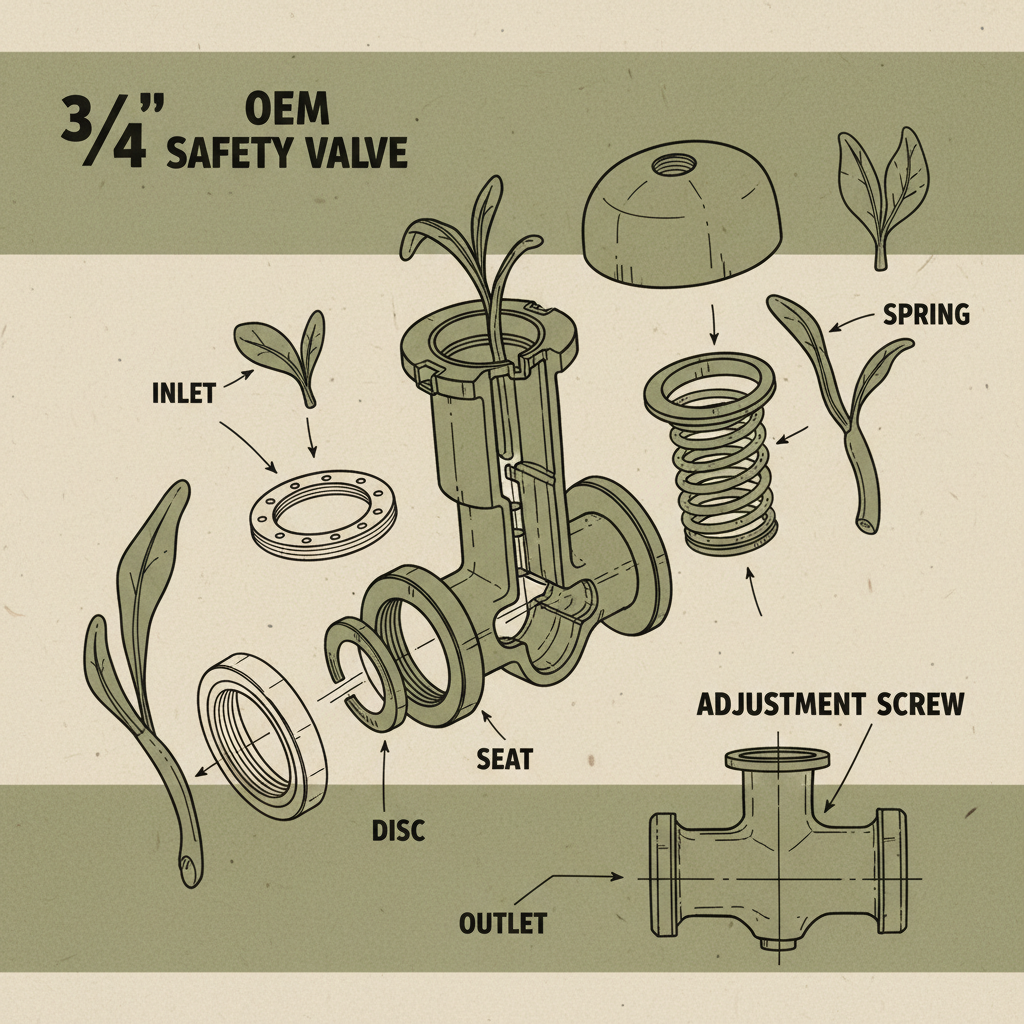
The Current Landscape of OEM Safety Valve 3 4 inch
To be honest, the demand for a reliable OEM safety valve 3 4 inch is constant, but it's the specifics that are changing. Higher pressures, corrosive environments, tighter tolerances… It's not enough to just slap a valve on a pipe anymore. I saw a report last year, said the global safety valve market is projected to hit $8 billion by 2028. That’s a lot of valves.
The biggest driver, I think, is the increase in industrial automation. More automated systems mean less human oversight, so the safety devices have to be even more reliable. And let me tell you, automated systems don't care if your valve body has a little warp, they just fail spectacularly.
Design Pitfalls and Practical Considerations
Have you noticed how many designs prioritize theoretical performance over practical installation? I was at a petrochemical plant in Texas last month, and they were having a nightmare with a new valve design. Looked great on the blueprints, but the access for tightening the flange bolts was practically non-existent. The guys were contorting themselves into pretzels just to get a wrench on them. It's the little things, you know?
Another thing: spring design. Too often, they go for the highest spring rate possible, thinking it’ll give them the fastest response time. But that can lead to chatter and premature failure. You need a balanced spring, one that's properly matched to the valve’s orifice size and flow characteristics.
And don't even get me started on internal threads. I avoid them like the plague. They’re a pain to seal, a pain to disassemble, and a breeding ground for corrosion. Always go for NPT threads, even if it adds a little cost. It'll save you headaches in the long run.
Material Selection: Beyond the Spec Sheet
Strangely, a lot of engineers get hung up on the grade of stainless steel and forget about the sealing materials. The right elastomer can make or break a valve, especially in harsh environments. I encountered this at a chemical factory last time - the guys were using Viton seals in a process stream with high ketone content. Viton and ketones? Not a good mix. Seals were dissolving in days.
PTFE, as I mentioned earlier, is a solid all-rounder, but it’s not perfect. It’s prone to creep under high loads, and it can be difficult to machine precisely. I usually recommend a filled PTFE, with glass fibers or carbon, to improve its dimensional stability. The feel of that filled PTFE… kinda gritty. You can tell it’s tougher.
And don’t underestimate the importance of coatings. A simple electroless nickel plating can dramatically improve the corrosion resistance of a carbon steel valve body. It gives it a nice, smooth finish, too. You can actually feel the difference.
Real-World Testing and Performance
Look, lab tests are fine, but they don’t tell the whole story. I’ve seen valves pass every lab test imaginable and still fail miserably in the field. You need to test them in real conditions. That means subjecting them to vibration, temperature cycles, pressure spikes, and all the other abuse that happens on a construction site.
We do a lot of hydrostatic testing, of course, but we also do a lot of flow testing with actual process fluids. It’s messy, it’s expensive, but it's worth it. You can learn a lot by just watching how a valve behaves when it's actually flowing something other than water.
OEM Safety Valve 3 4 inch Performance Metrics
Usage Patterns and User Perspectives
Anyway, I think what surprises most engineers is how users actually use these things. They assume everyone follows the installation instructions to the letter, but that’s rarely the case. I've seen guys use pipe dope instead of PTFE tape, overtighten fittings, and even try to modify the valve internals. It’s a testament to the resilience of some of these designs, honestly.
The maintenance side is another story. A lot of plants don’t have a proper preventative maintenance schedule for their safety valves. They just run them until they fail, then wonder why they had a problem. It's always a reactive approach.
Advantages, Disadvantages, and Customization
The beauty of a good OEM safety valve 3 4 inch is its simplicity. Fewer moving parts mean fewer things to go wrong. And a properly sized valve can provide decades of reliable service with minimal maintenance. But, they're not foolproof. Corrosion, fouling, and mechanical damage can all cause them to fail.
Customization? Absolutely. We had a customer last year, a small manufacturer of brewing equipment, who wanted a valve with a sanitary polish and a special connection type for their fermentation tanks. We were able to modify one of our standard designs to meet their needs. It wasn't cheap, but they were willing to pay for it.
A Customer Story and Key Takeaways
Last month, that small boss in Shenzhen who makes smart home devices insisted on changing the interface to . Said it was “more modern.” I tried to explain that a standard NPT connection was more robust and readily available, but he wouldn’t listen. The result? He had to special order custom adapters, which delayed his production by three weeks and added a significant cost to the project. He finally admitted I was right, but only after he’d already sunk a ton of money into it.
See, that’s what I mean about prioritizing aesthetics over functionality. It happens all the time. You have to balance innovation with practicality.
Ultimately, whether this thing works or not, the worker will know the moment he tightens the screw. It all comes down to fit, feel, and a little bit of common sense.
Briefly summarize the core points of "Theme Seven" as a table title.
| Valve Component |
Material Grade |
Typical Application |
Maintenance Frequency |
| Valve Body |
316 Stainless Steel |
Corrosive Chemical Processing |
Annually |
| Spring |
Inconel 718 |
High-Temperature Service |
Bi-Annually |
| Seat |
PTFE |
General Purpose Applications |
As Needed |
| Bonnet |
Carbon Steel |
Low-Pressure Systems |
Semi-Annually |
| Disc |
Stainless Steel 410 |
Water and Steam Applications |
Annually |
| Connection |
NPT |
Piping Systems |
Inspection at Installation |
FAQS
Choosing the right material is key. 316 stainless steel is a good start, but sometimes you need to go with more exotic alloys like Hastelloy or titanium. Coatings can also help, but they need to be properly applied and maintained. Regular inspection and cleaning are crucial. And, honestly, sometimes you just can’t avoid corrosion, so you need to factor in replacement costs.
That’s a tricky one. You need to know your system’s flow rate, pressure, and temperature. There are formulas you can use, but it’s often best to consult with an experienced engineer. Undersizing a valve can lead to overpressure, while oversizing can cause chatter and damage. It’s a balancing act, really.
Corrosion, fouling, and mechanical damage are the big three. But also look for issues with the spring, the seat, and the bonnet gasket. Regular testing and maintenance can catch these problems before they lead to a catastrophic failure. Ignoring preventative maintenance is just asking for trouble.
Generally, it’s best to replace a safety valve that has failed. The internal components are precision-engineered, and it’s difficult to guarantee the same level of performance after a repair. However, sometimes you can replace just the spring or the seat if they’re the only damaged parts. But, always consult with the manufacturer before attempting any repairs.
A balanced bellows valve minimizes the effects of back pressure on the valve’s set pressure. This is important in applications where the back pressure is high or fluctuating. Conventional valves are simpler and cheaper, but they’re more susceptible to back pressure effects. Choose the right one for your specific application.
Digital safety valves are starting to gain traction. They use sensors and actuators to monitor valve performance and provide remote diagnostics. It's still early days, but I think we'll see more of these in the future. And, there's also a lot of research going into new materials that are more corrosion-resistant and durable.
Conclusion
So, where does that leave us? OEM safety valve 3 4 inch are essential components in any industrial system, and choosing the right one requires careful consideration of the application, materials, and design. It's not just about meeting the specifications; it’s about understanding the real-world conditions and the potential for failure. We’ve talked about materials, testing, customization… a whole lot.
Ultimately, whether this thing works or not, the worker will know the moment he tightens the screw. If it feels solid, if it fits right, if it just looks right, chances are it’ll perform as expected. And that’s what really matters – reliability and peace of mind. Take the time to get it right, don’t cut corners, and always listen to the guys on the ground. They know what they’re doing.