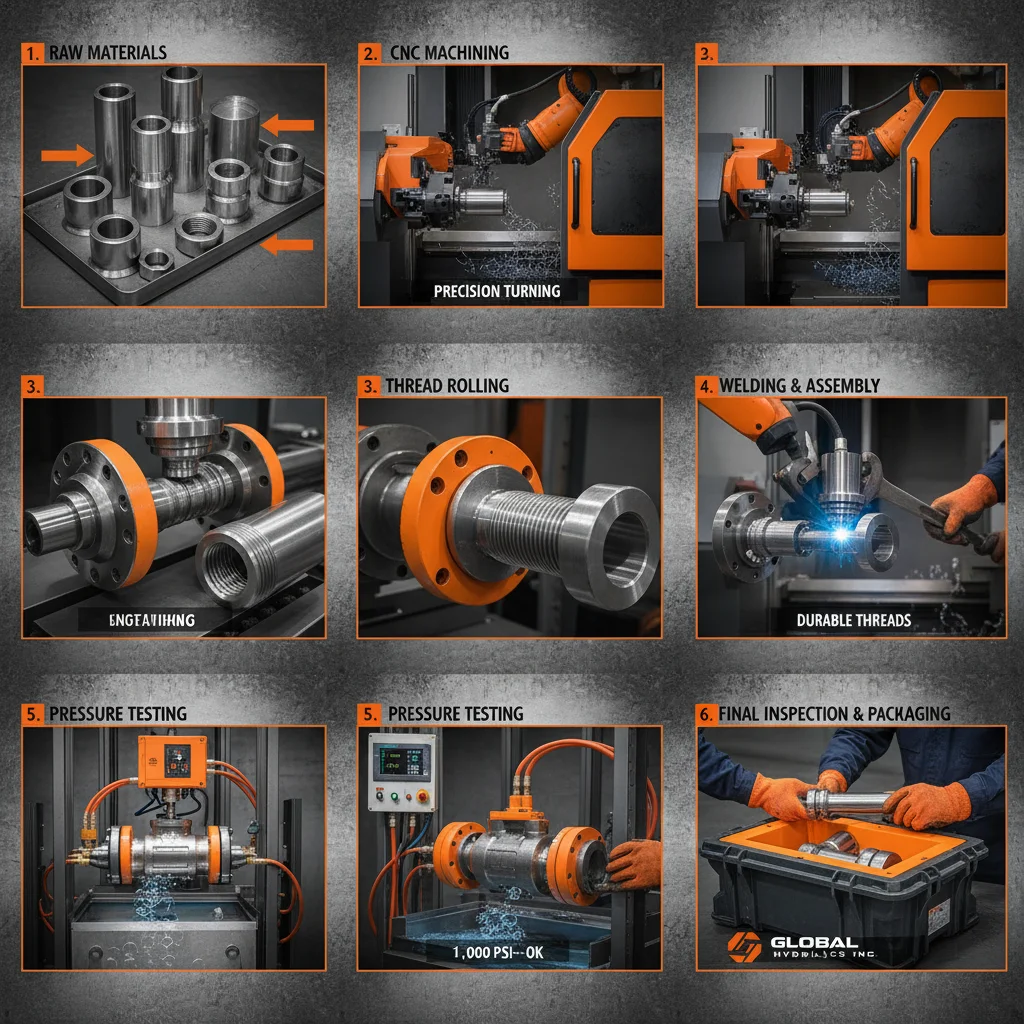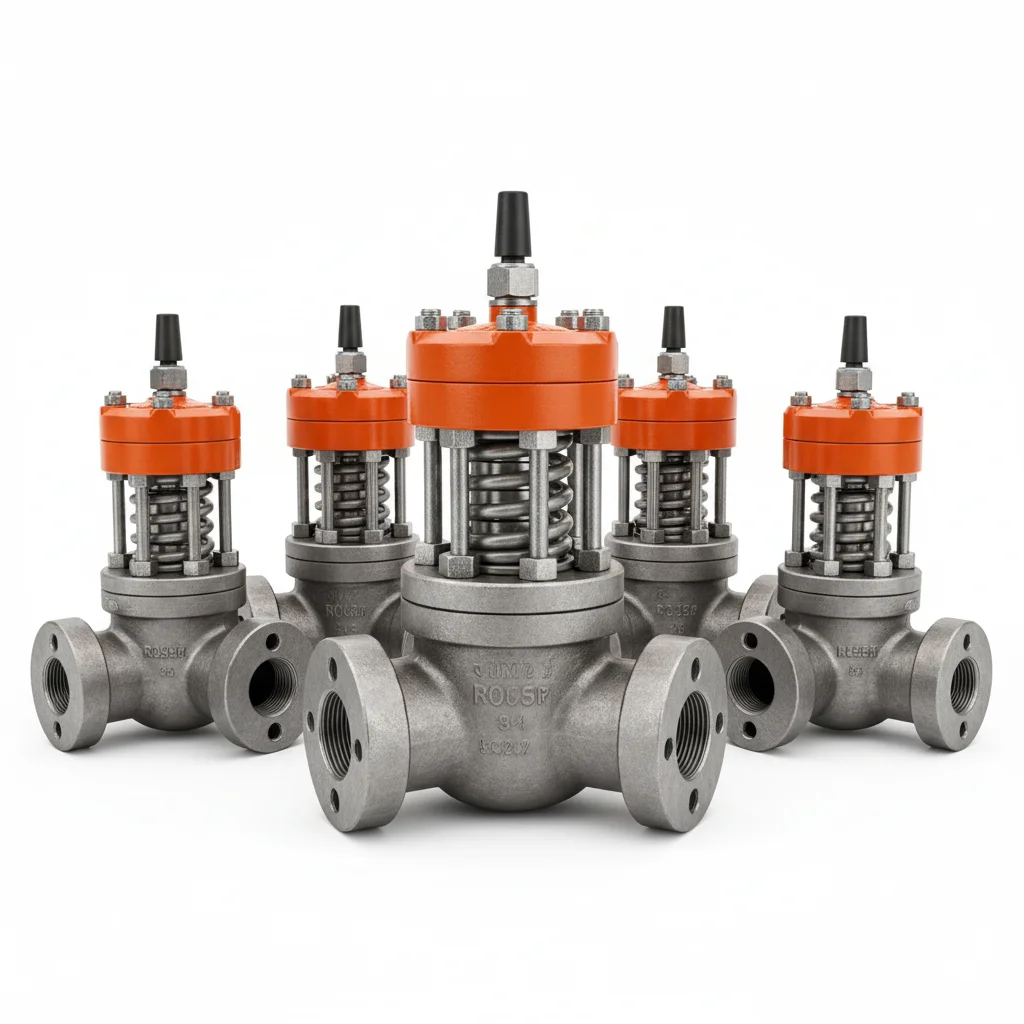
Managing wellbore integrity requires a sophisticated balance between flow control and fail-safe security. When operational pressures fluctuate or unexpected influxes occur, the reliance on high-precision safety mechanisms becomes the primary line of defense against catastrophic blowouts and environmental hazards.
The selection of an OEM tubing safety valve is rarely a matter of simple procurement; it is a strategic technical decision based on the specific geothermal gradients, chemical compositions of the produced fluids, and the rated working pressures of the completion string.
This report examines the critical intersection of safety valve engineering and high-pressure conduit systems, analyzing how integrated components like API-certified line pipes enhance the overall reliability of drilling rig manifolds.

Fail-Safe Logic in Downhole Safety

The fundamental purpose of an OEM tubing safety valve is to act as a fail-safe barrier. Unlike standard pipeline valves, these are designed to automatically close the production tubing in the event of an emergency, preventing uncontrolled flow to the surface. This mechanism typically relies on a spring-loaded flapper or a ball-type closure that remains open only under specific hydraulic pressure from a control line.
Failure to adhere to OEM specifications during installation can lead to "stuck" valves or premature closures, both of which result in costly intervention workovers. Precision in the machining of the valve seat is paramount to ensure a hermetic seal against high-pressure gas or liquid columns.
Engineering Constraints for High-Pressure Seals
The effectiveness of any safety valve is only as strong as the conduit connecting it to the manifold. In oil and gas operations, the interface between the valve and the line pipe must handle extreme pressure fluctuations. This requires the use of high-strength carbon steel and precision threading to prevent leak paths at the connection points.
Material selection is governed by the risk of Hydrogen-Induced Cracking (HIC) and Stress Corrosion Cracking (SCC). For environments involving H2S or high CO2 concentrations, alloys must be carefully chosen to maintain structural integrity over a 5-to-8-year operational lifespan, far exceeding the 2-to-3-year cycle of standard grade piping.
Furthermore, the geometry of the connection—whether using integral flanges or welded options—determines the system's vulnerability to vibration and thermal expansion. Integral designs are generally preferred for maximum pressure ratings because they eliminate the weld-leak points inherent in joined assemblies.
The Synergy of API 5L Pipeline Integrity
To support the function of a safety valve, the surrounding infrastructure must meet rigorous standards. API 5L High-Pressure Horizontal Line Pipes provide the necessary stability for drilling rig manifolds, ensuring that the pressure delivered to the safety system remains consistent and controllable.
The integration of API 5L compliant high-pressure pipes allows for working pressures up to 140 MPa, representing a significant increase in safety capacity compared to standard line pipes that typically cap at 40 MPa.
This structural capability is essential when deploying valves in arctic or desert climates. With temperature ratings ranging from -29℃ to 121℃, these assemblies ensure that the metal does not become brittle in extreme cold or lose tensile strength in extreme heat, maintaining the safety valve's operational window.
Quantifying Performance in Extreme Environments
When comparing standard equipment to high-specification API 5L assemblies, the difference in reliability is quantifiable. The primary metric is the "Failure Rate Index," which tracks the frequency of seal compromises under volatile pressure cycles. High-grade carbon steel and precision NDT (Non-Destructive Testing) drastically lower this risk.
Below is a relative assessment of how high-pressure assemblies perform across key operational dimensions compared to generic alternatives.
Figure 2. Comparative Performance Index: Standard vs. API 5L High-Pressure Pipe
Application Scenarios in Modular Manifolds
In a typical industrial setting, such as a modular drilling rig, the need for rapid deployment requires the use of Union type straight pipes. These allow for quick disconnection and reconnection of the manifold system without compromising the seal integrity of the safety valve. When combined with a nominal diameter of 1" to 5", these systems can be scaled to match the specific flow rate of the well.
For permanent installations, integral flange configurations are used to minimize the number of joints. This reduces the probability of hazardous leaks in critical pipeline segments and ensures that the safety valve operates within a stable structural environment, even when the manifold is subjected to intense seismic or operational vibration.
Trends in Digital Pressure Monitoring
The industry is shifting toward "smart" manifolds where pressure integrity is monitored in real-time. Digital certification tracking for API 5L compliance now allows operators to trace the material origin and test history of every single pipe segment connected to the safety valve.
Maintenance is evolving from fixed quarterly schedules to condition-based monitoring. By analyzing pressure drops and thermal fluctuations, engineers can predict the wear of the valve's sealing elements before a failure occurs, reducing unplanned downtime significantly.
Future developments are likely to focus on the integration of autonomous control lines that can trigger the safety valve based on AI-driven anomaly detection, removing the lag time associated with human intervention in high-pressure blowouts.
Selection Framework for Safety Valve OEMs
Choosing the right OEM partner requires an evaluation of their manufacturing capability and adherence to international standards. A manufacturer like Hebei Hongru Petroleum Machinery Co., Ltd., with nearly three decades of experience, provides a benchmark for how customized solutions should be implemented in oil and gas sectors.
The trade-off often lies between cost and longevity. While standard piping is cheaper upfront, the total cost of ownership (TCO) for high-pressure API 5L systems is lower due to extended service lives and reduced maintenance frequency.
The following table provides a conceptual framework for selecting the appropriate pipeline and valve configuration based on the operational environment.
| Environment Type | Pressure Load | Recommended Connection | Critical Factor |
|---|---|---|---|
| Arctic Drilling | Medium-High | Integral Flange | Thermal Stability (-29℃) |
| Deepwater Production | Extreme (140MPa) | Integral Flange | Corrosion Resistance |
| Modular Rig | Variable | Union Type | Deployment Speed |
| Standard Onshore | Low-Medium | Welded Flange | Cost Efficiency |
| High-H2S Wells | High | Integral Flange | Material Grade (CS) |
| Temporary Flowline | Medium | Union Type | Sealing Agility |
Questions & Answers
A standard gate valve is manually or remotely operated for flow control. In contrast, an OEM tubing safety valve is a fail-safe device designed to close automatically when hydraulic pressure is lost in the control line. Its primary purpose is emergency isolation rather than routine flow regulation, requiring much tighter tolerances and specific spring-load mechanisms to ensure immediate closure during a blowout scenario.
Welded flanges introduce a heat-affected zone (HAZ) where the metal's properties can change, potentially creating a weak point for leaks or corrosion. In systems operating at 140 MPa, these weld-leak points are high-risk areas. Integral flanges, which are machined from a single piece of steel, eliminate these points entirely, providing maximum structural integrity and higher safety margins for extreme pressure environments.
Seal integrity is achieved through high-precision pressure thread sealing technology combined with API-certified high-strength carbon steel. The threads are machined to exact specifications to ensure a hermetic metal-to-metal seal. This is supplemented by rigorous non-destructive testing (NDT) before shipment, ensuring that every unit can withstand the maximum workload without any hazardous leaks.
The choice of nominal diameter (typically between 1" and 5") depends on the required flow rate and the pressure drop calculations of the well. Smaller diameters (1"-2") are often used for control lines and low-volume production, while larger diameters (3"-5") are necessary for high-volume flow and mud circulation to minimize friction losses and maintain the efficiency of the safety valve's operation.
Extreme temperatures can cause material contraction or expansion, potentially leading to seal failure or valve seizure. PU grade assemblies are specifically engineered to remain ductile at -29℃ and stable at 121℃. This thermal versatility ensures that the safety valve's spring and sealing elements function correctly regardless of whether the rig is operating in the Arctic or in high-temperature geothermal wells.
While not always legally mandatory in every jurisdiction, API 5L compliance is the industry gold standard for oil and gas transportation. Using non-compliant piping in a high-pressure manifold increases the risk of catastrophic failure. Compliance ensures universal compatibility between components from different OEMs and guarantees that the pipe can handle the rated pressures required to support the safety valve's function.
Final Thoughts
The reliability of a downhole safety system is a cumulative result of precision engineering, from the internal flapper of the safety valve to the wall thickness of the API 5L line pipe. By prioritizing integral designs and high-strength materials, operators can significantly reduce the probability of failure in the most demanding environments.
As the industry moves toward higher pressure reservoirs and more extreme climates, the integration of certified OEM components becomes not just a preference, but a necessity for operational safety and environmental protection.