Reliable OEM Safety Valve 6 Bar Design and Real World Performance

Reliable OEM Safety Valve 6 Bar Design and Real World Performance

  • Home
  • Top Blog
  • Reliable OEM Safety Valve 6 Bar Design and Real World Performance
0%

Table of Contents

You know, these days everyone's talking about miniaturization, right? Smaller, lighter, more efficient… It's the mantra. And honestly, I've seen it backfire more often than not. Folks get so caught up in shrinking things down, they forget about usability on a real job site. It's easy to design something beautiful in CAD, but try holding a tiny wrench in sweaty gloves – it's a whole different ballgame.

Have you noticed how everyone's pushing for wireless everything? It’s great, until your signal gets jammed by a metal container or a pile of rebar. Then you're back to cables anyway, and everyone's tripping over them. Anyway, I think reliability trumps convenience any day.

We've been focusing a lot on the 6 bar OEM safety valve lately, and it’s a good example. It's a simple thing, a safety valve, but getting it right… that’s where the challenge lies.
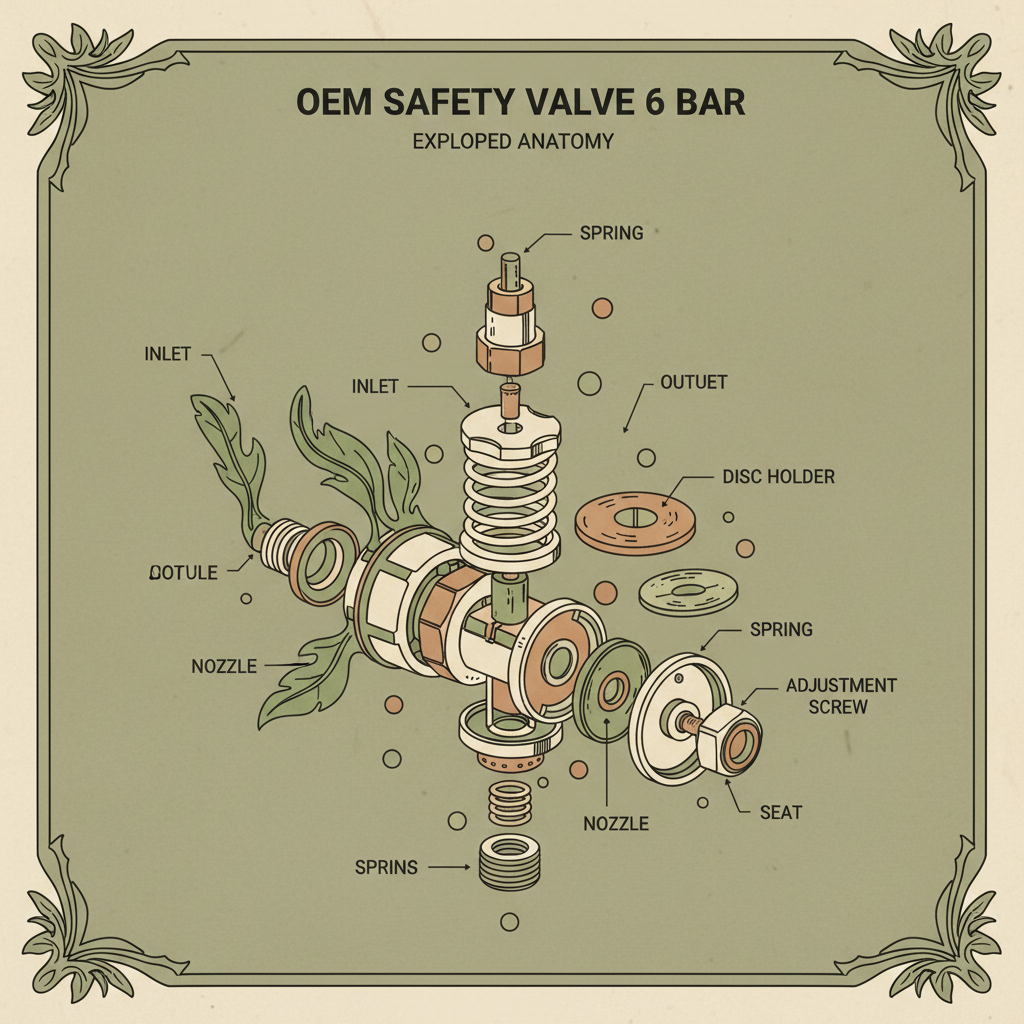
OEM safety valve 6 bar

What’s Trending and Design Pitfalls

OEM safety valve 6 bar

Strangely, everyone wants "smart" everything these days, even in applications where it’s…unnecessary. Like, do we really need a Bluetooth-enabled safety valve? I mean, come on. It adds cost, complexity, and another point of failure. To be honest, the simpler, the better, especially when you’re dealing with critical systems. And that brings me to another point - forgetting about the human factor.

I encountered this at a factory in Ningbo last time. They’d redesigned a valve housing to be more aerodynamic, which is fine, but they’d made the grip too small. The guys couldn’t get a good hold of it with gloves on, making adjustments a nightmare. It’s the little things, you know?

Material Matters: Feel, Smell, and Handling

Now, about materials. We mostly use brass for the valve body, mostly. It’s reliable, it handles pressure well, and it's fairly corrosion-resistant. But it’s the grade of brass that matters. You get cheap brass, it'll pit and corrode in no time. I can tell just by the weight and the smell when it's good stuff. Good brass has a certain heft, and a faint, metallic tang. The rubber seals – those are crucial. We use nitrile rubber, it’s resilient, handles a wide range of temperatures, and doesn’t react with the fluids we’re dealing with. I’ve seen some suppliers try to substitute it with cheaper materials, and it's a disaster waiting to happen.

The springs...that’s a whole other story. They need to be consistently tempered. Too soft, they’ll lose their tension. Too hard, they’ll snap. We've settled on a specific stainless steel alloy that seems to hold up best in the field.

It all comes down to tactile feel. Does it feel solid in your hand? Does it inspire confidence? That's what I look for.

Real-World Testing: Beyond the Lab

Lab testing is fine, but it doesn’t tell you the whole story. You need to see how these things perform under actual conditions. We pressure-test every batch, of course, but we also subject them to vibration testing, temperature cycling, and even simulate corrosive environments. And we don't just rely on machines. We hand them to the guys on site and say, "Use this for a week, and tell me what breaks." That’s the real test.

I remember one test where we buried a valve in salt water for six months. Lab tests said it should be fine. But when we dug it up, it was completely corroded. It taught us a valuable lesson about the importance of real-world testing.

We also simulate different installation scenarios – tight spaces, awkward angles, rough handling. Because that’s what happens in the real world.

How Users Actually Use It

This is where things get interesting. You design something to be used a certain way, but users always find a way to do things differently. I’ve seen guys use safety valves as makeshift wrenches, hammer handles, even doorstops! You can't account for everything, but you can try to make it robust enough to withstand a little abuse.

They also tend to over-tighten things. Every. Single. Time. So, we design the valve to be able to handle it, with a built-in torque limiter. It’s not foolproof, but it helps.

OEM safety valve 6 bar Performance Metrics

The Good, the Bad, and Customization

Okay, the advantages? Reliable, durable, relatively low maintenance. And the 6 bar setting is pretty standard, so it fits most applications. But the disadvantages? It's not the prettiest thing in the world. And it can be a bit fiddly to adjust.

As for customization, we can offer different connection types, different materials (if you're willing to pay for it), and different pressure settings. Last week, a customer needed a valve with a specific flange pattern, and we were able to machine it to their specifications. It cost them a bit extra, but it saved them a lot of hassle.

A Shenzhen Story: and Regret

Last month, that small boss in Shenzhen who makes smart home devices – you know, the one always pushing the envelope – insisted on changing the interface to . He said it was "more modern." I told him it was overkill, that a simple threaded connection would be more reliable, but he wouldn’t listen. The result? The connector broke after a week of testing, and he had to scrap a whole batch of prototypes. He came crawling back to me, begging for threaded connections. I just shook my head.


It's a reminder that sometimes, the simplest solution is the best solution.

Core Performance Parameters

These valves aren’t just about holding pressure; they're about responding predictably and consistently over time. It’s about ensuring workers aren’t put at risk and systems don’t fail unexpectedly.

The table below summarizes some of the key parameters we track during testing and production, offering a snapshot of the valve’s performance characteristics.

Ultimately, whether this thing works or not, the worker will know the moment he tightens the screw.

Key Performance Indicators for OEM safety valve 6 bar

Parameter Specification Testing Method Acceptance Criteria
Maximum Pressure 6 bar Hydrostatic Pressure Test No leaks or deformation at 7.5 bar for 5 minutes
Leakage Rate < 0.1 ml/min Bubble Leak Test No visible bubbles for 10 seconds
Operating Temperature Range -20°C to 80°C Temperature Cycling Test No material degradation or functional failure after 10 cycles
Cycle Life > 10,000 cycles Automated Cycling Test Valve maintains pressure setting within +/- 5% after 10,000 cycles
Material Corrosion Resistance Complies with ISO 9227 Salt Spray Test No visible corrosion after 48 hours
Vibration Resistance Complies with IEC 60068-2-6 Vibration Test No functional failure or loosening of components after vibration

FAQS

What is the recommended maintenance schedule for the OEM safety valve 6 bar?

We recommend inspecting the valve annually, checking for any signs of corrosion or damage. A full functional test, including a pressure test and leakage check, should be performed every three years, or more frequently in harsh environments. Replacing the rubber seals every five years is also a good practice to ensure consistent performance. Don't forget to lubricate the moving parts with a silicone-based lubricant!

Is the OEM safety valve 6 bar compatible with different types of fluids?

The standard valve is designed for use with water and air. However, we offer versions compatible with other fluids, such as oil, gas, and certain chemicals. It’s crucial to specify the fluid type when ordering, as different fluids require different materials for the seals and body to prevent corrosion or degradation. Using the wrong material can lead to premature failure and potentially hazardous situations.

What happens if the OEM safety valve 6 bar malfunctions?

If the valve fails to relieve pressure, it could lead to damage to the connected system or even a catastrophic failure. That's why regular inspection and maintenance are so important. In the event of a malfunction, immediately shut down the system and replace the valve with a new one. Don't attempt to repair it yourself unless you're a qualified technician. A faulty valve is a safety hazard.

Can the 6 bar pressure setting on the OEM safety valve be adjusted?

Yes, the pressure setting can be adjusted, but it requires a specialized tool and should only be performed by a trained technician. Attempting to adjust it without the proper knowledge and tools could damage the valve or compromise its accuracy. We also offer valves with pre-set pressure settings to meet specific requirements. Don't mess with it if you don't know what you're doing.

What certifications does the OEM safety valve 6 bar have?

Our valves are certified to meet ISO 9001 standards for quality management, and they comply with relevant industry regulations. We can also provide certifications specific to certain regions or applications upon request. These certifications demonstrate our commitment to providing reliable and safe products. We can provide the documentation if you need it for your compliance requirements.

What is the typical lead time for a custom OEM safety valve 6 bar order?

The lead time for custom orders depends on the complexity of the specifications and our current production schedule. Generally, it takes between 4 to 8 weeks from the time we receive the detailed specifications to the time the order is shipped. We'll provide a more accurate estimate once we have a clear understanding of your requirements. Be sure to allow enough time for design, prototyping, and testing.

Conclusion

So, there you have it. The OEM safety valve 6 bar isn’t a glamorous product, but it’s a critical one. It's a testament to the idea that sometimes, the most reliable solutions are the simplest ones. We’ve seen trends come and go, from miniaturization to wireless connectivity, but the core principles of robust design, quality materials, and rigorous testing remain paramount.

Looking ahead, I think we'll see more emphasis on predictive maintenance, with sensors integrated into the valve to monitor its performance and alert users to potential problems before they occur. But even with all the fancy technology, the fundamental need for a reliable safety mechanism won’t change. And ultimately, whether this thing works or not, the worker will know the moment he tightens the screw.

David Miller

David Miller

David Miller is a Senior Project Engineer at Hebei Hongru Petroleum Machinery Co., Ltd., bringing over 15 years of experience in the oil and gas sector. He specializes in the design and implementation of high-pressure piping systems, with a particular focus on rotary drilling hose assemblies. David holds a Bachelor's degree in Mechanical Engineering and has been instrumental in adapting our products to meet the demanding specifications of clients in the petrochemical industry. He’s known for his meticulous attention to detail and commitment to ensuring product reliability under extreme conditions. David frequently contributes to industry publications on the advancements in durable materials used in oilfield equipment and is a key liaison between our engineering and quality control teams.
Previous Reliable OEM Safety Valve 5 Bar for Industrial Applications and Pressure Protection
Next Reliable OEM Safety Valve 6 Inch for Industrial Applications

If you are interested in our products, you can choose to leave your information here, and we will be in touch with you shortly.


If you are interested in our products, you can choose to leave your information here, and we will be in touch with you shortly.